How to Protect Your Car Dashboard From the Arizona Sun
Published · By Andrew
Scheduled for January 8, 2027
The best way to protect your car dashboard from sun damage is to block the light and keep the surface clean and conditioned. Use a windshield sun shade every time you park outside, wipe the dash with a gentle interior cleaner instead of household products, and apply a non-greasy UV protectant every few weeks. Those three habits slow the fading, drying and cracking that Arizona sun causes.
Your dashboard takes more direct sun than any other surface in the car. It sits right under the windshield, it is often dark colored, and on a parked car in Mesa or Gilbert it can get far hotter than the air outside. This guide covers why dashboards break down, how to clean them safely, what to use for protection, and why winter sun still counts.
Why Arizona Sun Is So Hard on Dashboards
Dashboards are made of vinyl, plastic, soft-touch coatings or leather, and all of them contain oils and plasticizers that keep them flexible. Ultraviolet light and heat slowly break those down. Over time the surface fades, turns chalky or shiny, gets sticky in some cars, and eventually cracks, often near the defroster vents where heat concentrates.
Arizona speeds this up for a few reasons:
- Strong UV most of the year. The sun is intense even on cool days.
- Heat soak. A closed car parked in the sun bakes the dash for hours.
- Dust. Fine desert dust settles on the dash and acts like a mild abrasive when it is wiped off dry.
- Glass angle. Modern windshields are steeply raked and large, so more of the dash sits in direct light.
The good news is that most of this damage is slow and preventable if you start early.
Step One: Block the Light
Nothing protects a dashboard as well as keeping the sun off it.
- Use a windshield sun shade. A reflective, well-fitted shade blocks most of the direct light. Use it at work, at the grocery store and in your own driveway.
- Park smart. Covered parking, a garage or even pointing the nose of the car away from the afternoon sun reduces exposure.
- Crack the windows only if it is safe. A small gap lets some heat escape, but never leave a car open where weather or security is a concern.
- Consider a dash mat. A fabric dash cover adds a layer between the sun and the surface. Make sure it does not block airbag areas or vents.
Step Two: Clean the Dashboard the Right Way
How you clean a dashboard matters as much as how often. The wrong product can dry it out or leave a greasy film that reflects onto the windshield.
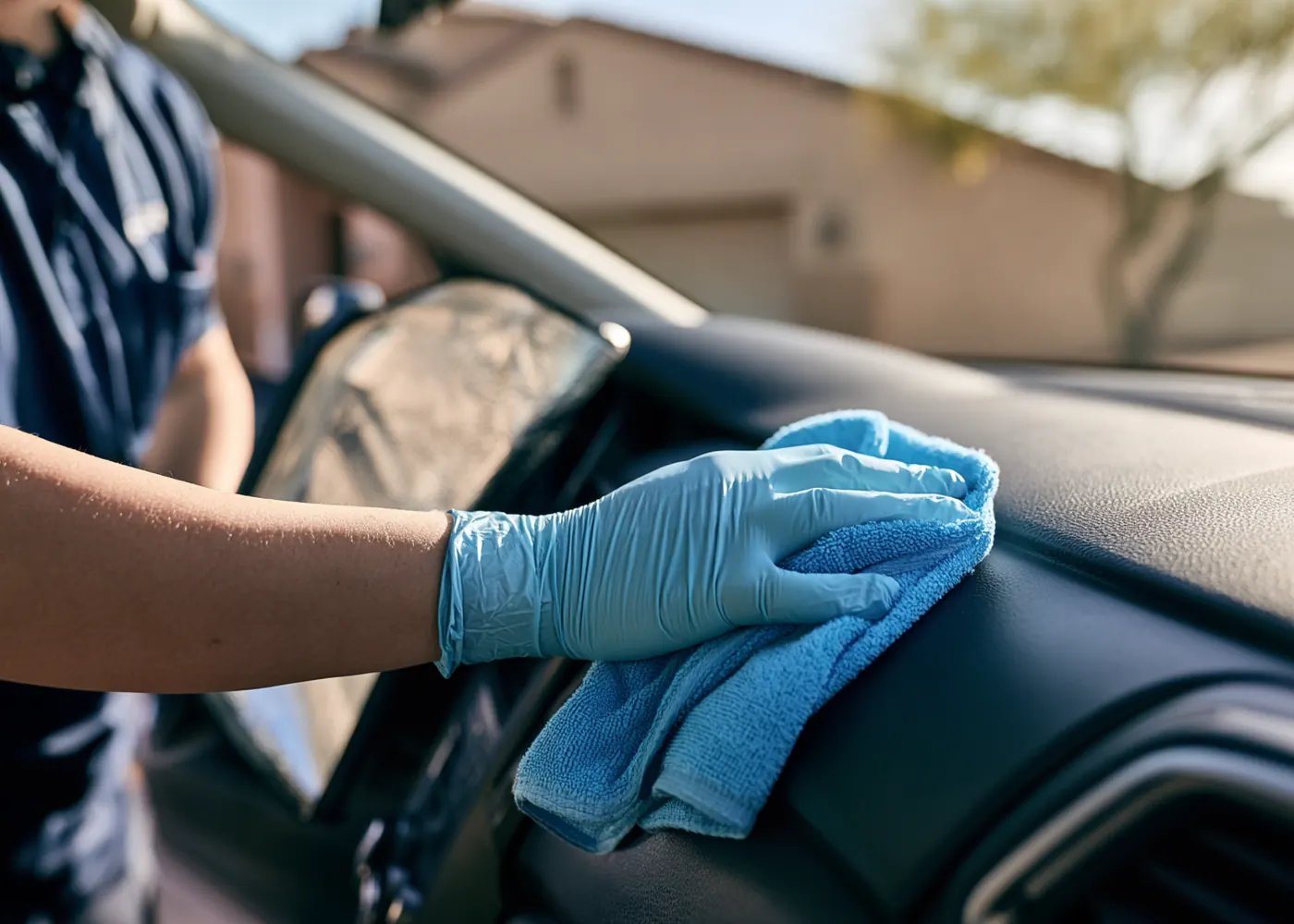
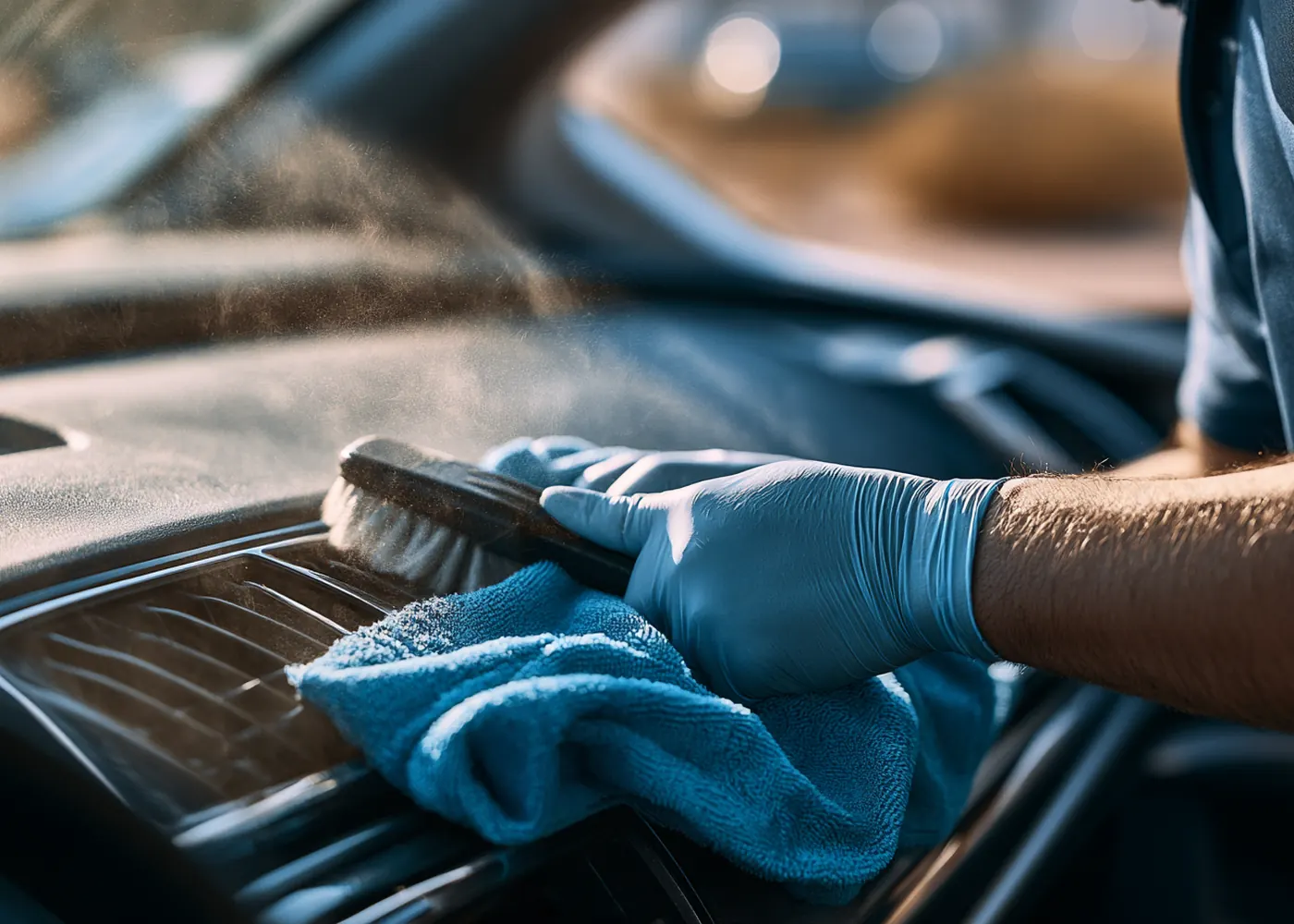
- Dust first. Use a soft, clean microfiber towel or a soft detailing brush to lift dust from the surface, seams and vents. Do not rub hard on a dusty dash.
- Use a dedicated interior cleaner. Spray it onto the towel, not the dash, so it does not run into vents, switches or screens.
- Wipe gently and turn the towel often. Fresh sides of the towel pick up grime instead of spreading it around.
- Dry buff with a second towel. This removes any leftover cleaner and prevents streaks.
Avoid household cleaners, glass cleaners with ammonia, magic erasers, and anything with bleach. They can strip protective coatings, dull soft-touch surfaces, and speed up cracking. If the dash is leather or partly leather, our guide to leather seat care in Arizona covers the right products for that material.
Step Three: Add UV Protection Without the Glare
After cleaning, a UV protectant helps slow fading and drying. The key is choosing a product with a matte or satin finish.
- Skip the greasy shine. Glossy dressings look wet, attract dust, and can reflect onto the windshield, which creates glare while you drive. That is a safety issue as well as a looks issue.
- Apply thin. Put a small amount on an applicator or towel and work it in evenly. Wipe off any excess.
- Keep it off the pedals and steering wheel grip. Those surfaces should never feel slick.
- Reapply regularly. In Arizona, every few weeks during warm months and every month or two in winter is a reasonable rhythm.
Dressings that sit on top of the dash and stay oily can also contribute to the hazy film that builds up on the inside of the windshield. A clean, dry, matte finish is what you want.
Screens, Gauges and Trim Need Extra Care
Today's dashboards are full of touchscreens, digital gauge clusters, piano black trim and soft-touch panels, and each needs a lighter touch.
- Screens: use a clean, dry microfiber towel or one barely dampened with water or a screen-safe cleaner. Never spray anything directly on the screen.
- Gauge cluster lenses: these scratch easily. Wipe gently and only with a clean towel.
- Piano black trim: this glossy plastic shows fine scratches. Avoid dry wiping when it is dusty.
- Buttons and knobs: a soft brush gets dust out of tight gaps better than a towel.
Why Winter Sun Still Matters
Many drivers relax about sun protection once the temperatures drop. In the Valley, that is a mistake. Winter days are often clear and bright, and the sun sits lower in the sky, so it shines through the windshield at a sharper angle and lands right on the dash for more of the day. Cooler air means the car does not feel as hot, but the UV is still working on the surface.
Winter is also a good time to catch problems early. If your dash already looks faded, chalky or sticky, getting it cleaned and protected now puts it in better shape before the heat returns in spring.
How a Professional Interior Detail Helps
A thorough interior detail gets into the places you skip during a quick wipe: defroster vent edges, seams around the instrument cluster, the gap at the base of the windshield, and every vent slat. Our Deluxe Shine Detail includes a deep clean of the dash, doors, jambs, cup holders and vents, and the Premium adds greater attention on every surface. You can compare what each package includes on our pricing page.
We are a family-owned team, and we come to you at home or work with our own water and power, so there is no need to drive anywhere or find a hose. Most drivers in Gilbert, Mesa and Chandler do well with an interior detail every 6 to 12 months, or every 3 to 6 months with heavy use.
Frequently asked questions
No. Cleaning and protectant can improve how a faded dash looks and slow further damage, but they do not close cracks. Deep cracks need repair or replacement by an interior specialist, so protecting the dash before it cracks is the best plan.
Every few weeks during the hot months and every month or two in winter works for most drivers. Cars parked outside all day without a sun shade benefit from more frequent care.
Some dashboards turn sticky as heat and age break down the material, and some greasy dressings leave a tacky residue. A gentle interior cleaner can remove product buildup. If the material itself is breaking down, cleaning helps, but a sun shade and regular care are what slow it.
More From The Blog
Want a price for your vehicle?