Leather Car Seat Care in Arizona: Cleaning, Conditioning and Preventing Cracks
Published · By Andrew
Scheduled for December 2, 2026
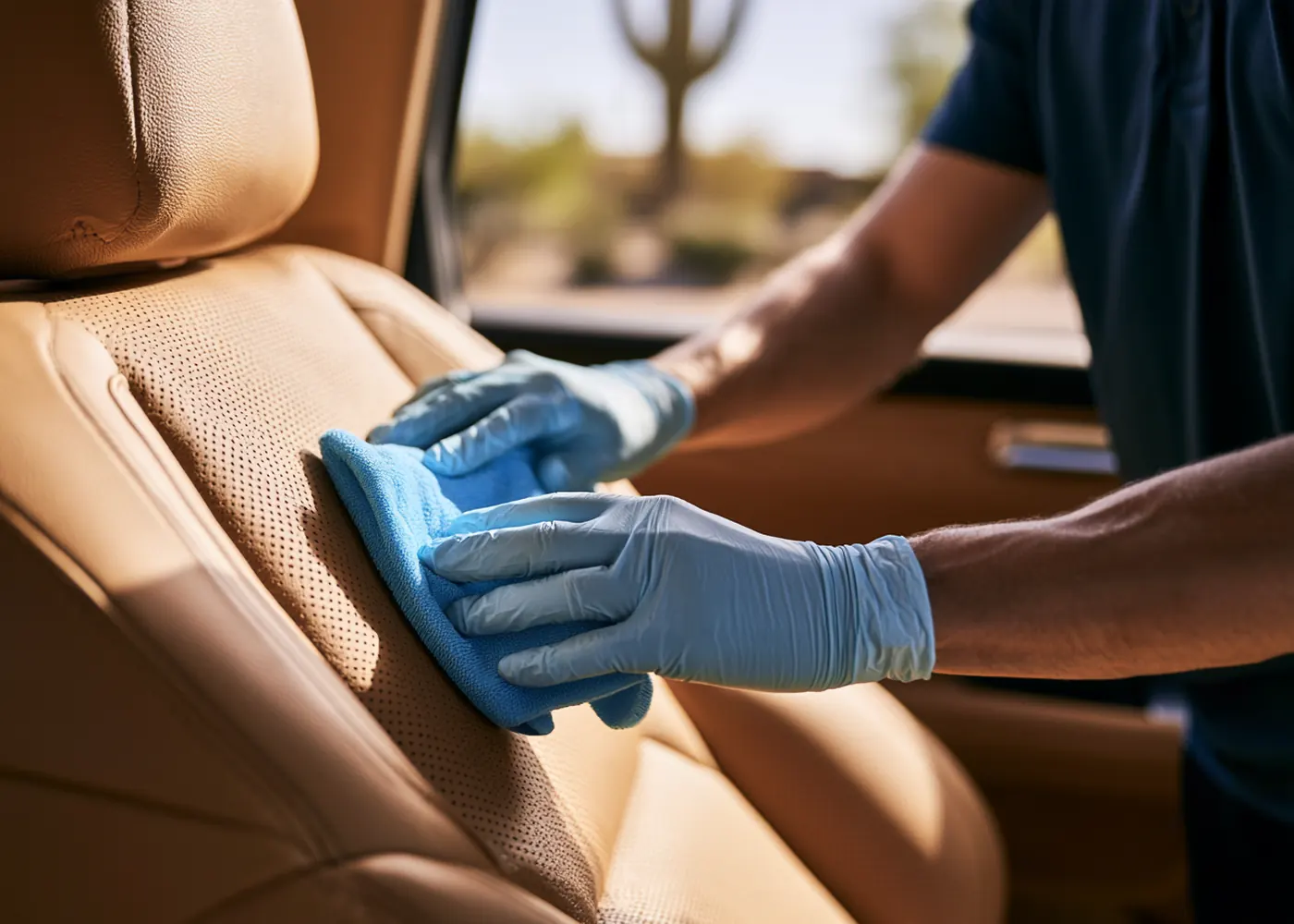
Leather car seat care in Arizona comes down to two steps: clean the leather gently to remove body oils, sunscreen and dust, then condition it to replace the moisture that heat and UV pull out. In the East Valley, most leather seats need conditioning every 3 to 4 months, and more often if the car is parked outside.
Leather is tough, but it is still a natural material. A summer of 110 degree days in a Gilbert parking lot can leave seats stiff, faded and starting to crack along the seams. The good news is that cooler months are the ideal time to bring them back and set them up for next summer.
Why Arizona Is Hard on Leather Seats
Leather stays soft because of the oils and moisture inside the hide. Arizona works against that from several directions.
- Heat. A closed car in the sun gets far hotter than the outside air. That heat draws moisture out of the leather.
- UV exposure. Sunlight through the windshield and side glass fades color and breaks down the leather's protective top coat, especially on the driver seat bolster and headrests.
- Low humidity. Dry desert air makes it harder for leather to hold moisture between conditionings.
- Dust and grit. Fine desert dust settles into the grain and seams. Every time you slide in and out, it acts like fine sandpaper.
- Body oils and sunscreen. These build up on the seat surface and can darken or stain the leather over time.
The result is a familiar pattern: shiny, grimy surfaces in high-contact areas, faded tops on the bolsters and headrests, and small cracks that start at the seams.
Cleaning vs Conditioning
These are two different jobs, and both matter.
Cleaning removes what sits on top of the leather: dirt, dust, oils, sunscreen and spills. Conditioning over a dirty seat just seals the grime in.
Conditioning restores moisture and flexibility to the leather itself. It helps prevent cracking and keeps the seat feeling soft instead of stiff.
Think of it like skin care. You wash first, then moisturize.
How to Clean and Condition Leather Seats at Home
You can do basic maintenance yourself between professional details. Work in the shade with the seats cool to the touch.
- Vacuum first. Use a soft brush attachment to pull dust and crumbs out of the seams and perforations.
- Test your cleaner. Try a small amount of a pH-balanced leather cleaner on a hidden spot, like the side of the seat base.
- Apply cleaner to a soft brush or microfiber, not the seat. Work in small sections with light pressure.
- Wipe it off right away. Use a clean, slightly damp microfiber, then dry with another towel.
- Condition. Apply a small amount of leather conditioner to an applicator pad and work it in evenly. A little goes a long way.
- Buff off the excess. After a few minutes, wipe the seat with a dry towel. Leather should look natural, not wet or glossy.
Perforated and Ventilated Seats Need Extra Care
Many newer cars have perforated leather with heating or cooling built in. Those tiny holes can clog with dirt, conditioner and cleaner, which blocks airflow and leaves dark spots.
- Never spray cleaner or conditioner directly onto perforated seats.
- Use less product than you would on smooth leather and apply it with a pad.
- Buff thoroughly so nothing sits in the holes.
- Vacuum with a soft brush to pull debris out of the perforations first.
Products and Habits to Avoid
Some common shortcuts do more harm than good.
- Household cleaners and dish soap. Many are too harsh and strip the leather's finish.
- All-purpose wipes. Some contain alcohol or chemicals that dry leather out.
- Greasy silicone dressings. They leave a slippery, shiny surface that attracts dust and can transfer to your clothes.
- Too much water. Soaking leather can cause stiffness and stains.
- Scrubbing hard. Aggressive brushing can wear through the color coat.
Simple Ways to Protect Leather Between Details
- Use a windshield sun shade every time you park outside.
- Park in the shade or a garage when you can, and crack the windows slightly if it is safe.
- Wipe up spills right away, especially sugary drinks that turn sticky in the heat.
- Lay a towel on the seat after the gym or pool to keep sweat and sunscreen off the leather.
- Keep a schedule. In Arizona, clean and condition every 3 to 4 months, and add an extra round before summer.
When to Get Professional Leather Care
Our Deluxe Shine Detail (from $250) includes leather cleaning along with upholstery and floorboard detailing and a deep clean of the dash, doors, cup holders and vents. To restore softness and moisture, add Leather Conditioning for $75 (third row +$30). It takes about 45 minutes. See all of our options on the pricing page or learn more about our interior detailing.
If your seats have heavy stains, ask about pairing leather cleaning with our Sanitizing Steam Cleaning add-on. For stain-specific DIY tips, see our guide on how to get stains out of car seats.
We come to your home or office anywhere from Scottsdale to Queen Creek with our own water and power, so you can keep your day moving while we work.
Frequently asked questions
Conditioning can soften stiff leather and make fine surface lines less noticeable, but it cannot close a crack that has already split the leather. Deep cracks and tears need a leather repair specialist. Regular conditioning is the best way to keep new cracks from forming.
Many cars use synthetic or coated leather that looks like real leather but does not absorb conditioner the same way. These seats mostly need gentle cleaning and UV protection rather than heavy conditioning. Check your owner's manual or ask your detailer to identify what your seats are made of.
Stickiness usually comes from a buildup of body oils, sunscreen, spilled drinks or a heavy dressing product that softens in the heat. A proper leather cleaning removes that layer. Following up with a light, non-greasy conditioner keeps the surface smooth.
More From The Blog
Want a price for your vehicle?