Car Vents Blowing Dust? Why It Happens in Arizona and How to Fix It
Published · By Andrew
Scheduled for January 18, 2027
If your car vents are blowing dust, the two most common causes are a dirty or clogged cabin air filter and dust that has settled in the vent slats, ducts and dash. In Arizona, fine desert dust gets into the system every time you drive with the fan on, open the doors on a windy day, or park near construction or dirt lots. Replacing the cabin filter and cleaning the vents and interior usually fixes it.
You might notice a puff of dust when you turn the fan on high, a film on the dash a day after you wipe it, or a musty smell when the air first starts. Drivers in Queen Creek, San Tan Valley and other areas with open land and dirt roads see it most. This guide explains where the dust comes from, what you can do yourself, and when a detail helps.
Where Vent Dust Comes From
Your car's climate system pulls outside air in through an intake near the base of the windshield, sends it through a cabin air filter, and pushes it out through the vents. Dust can build up at several points:
- The cabin air filter. It catches dust and debris before it reaches you. When it is full, airflow drops and dust can get past it.
- The vent slats and openings. Dust settles on the slats and around the vent housings every time you dust the dash, open the doors or drive with the windows down.
- The dash and defroster vents. Dust on top of the dash gets blown around when air moves across it.
- Recirculated cabin dust. Dust from carpets, seats and mats gets stirred up and pulled back through the system on recirculate.
Monsoon storms, off-road trips and construction zones all add a lot of dust at once. If you have been on trails recently, our guide to cleaning your car after off-roading covers the rest of the interior too.
Step One: Check the Cabin Air Filter
The cabin air filter is the first thing to check if dust or a smell is coming from the vents. Many drivers have never had theirs replaced.
- Your owner's manual shows where the filter is and how often to replace it. In dusty Arizona conditions, it often needs replacing more often than the standard schedule.
- On many cars it sits behind the glovebox and is easy to reach. On others, it is under the hood or the dash.
- If you are not comfortable changing it, your mechanic or dealership can replace it during an oil change.
A detail does not replace your cabin filter, and we do not sell filters. But a fresh filter combined with a clean interior is what actually stops the dust from coming back right away.
Step Two: Clean the Vents and Dash
Once the filter is handled, clean the dust that has already built up inside the cabin.
- Turn the fan off. You do not want to blow dust around while you clean.
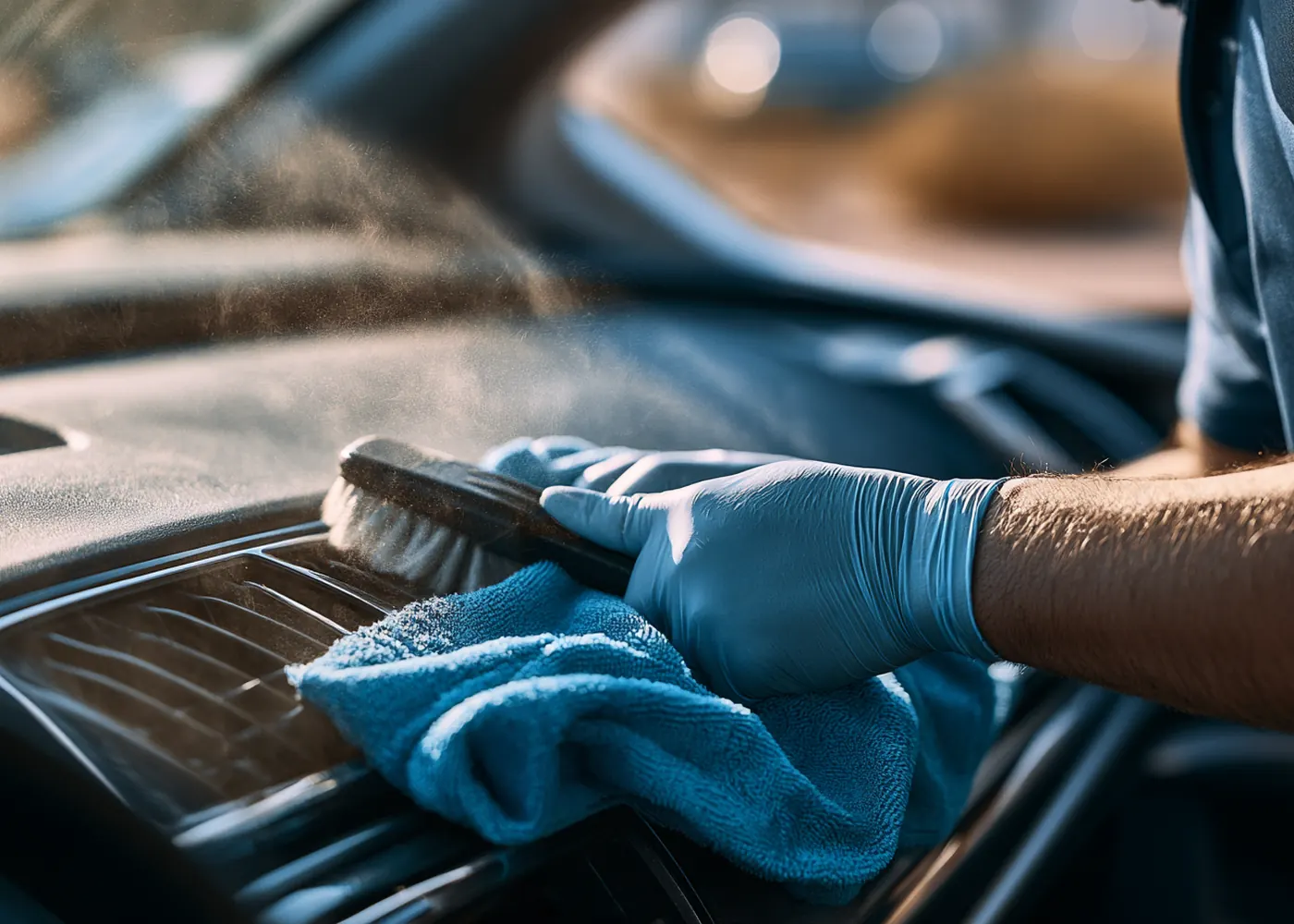
- Brush the vent slats. Use a soft detailing brush to loosen dust from each slat and the edges of the housing. Hold a vacuum nozzle or a microfiber towel underneath to catch it.
- Wipe the dash and defroster area. Use a clean microfiber towel with a little interior cleaner sprayed on the towel, not the dash.
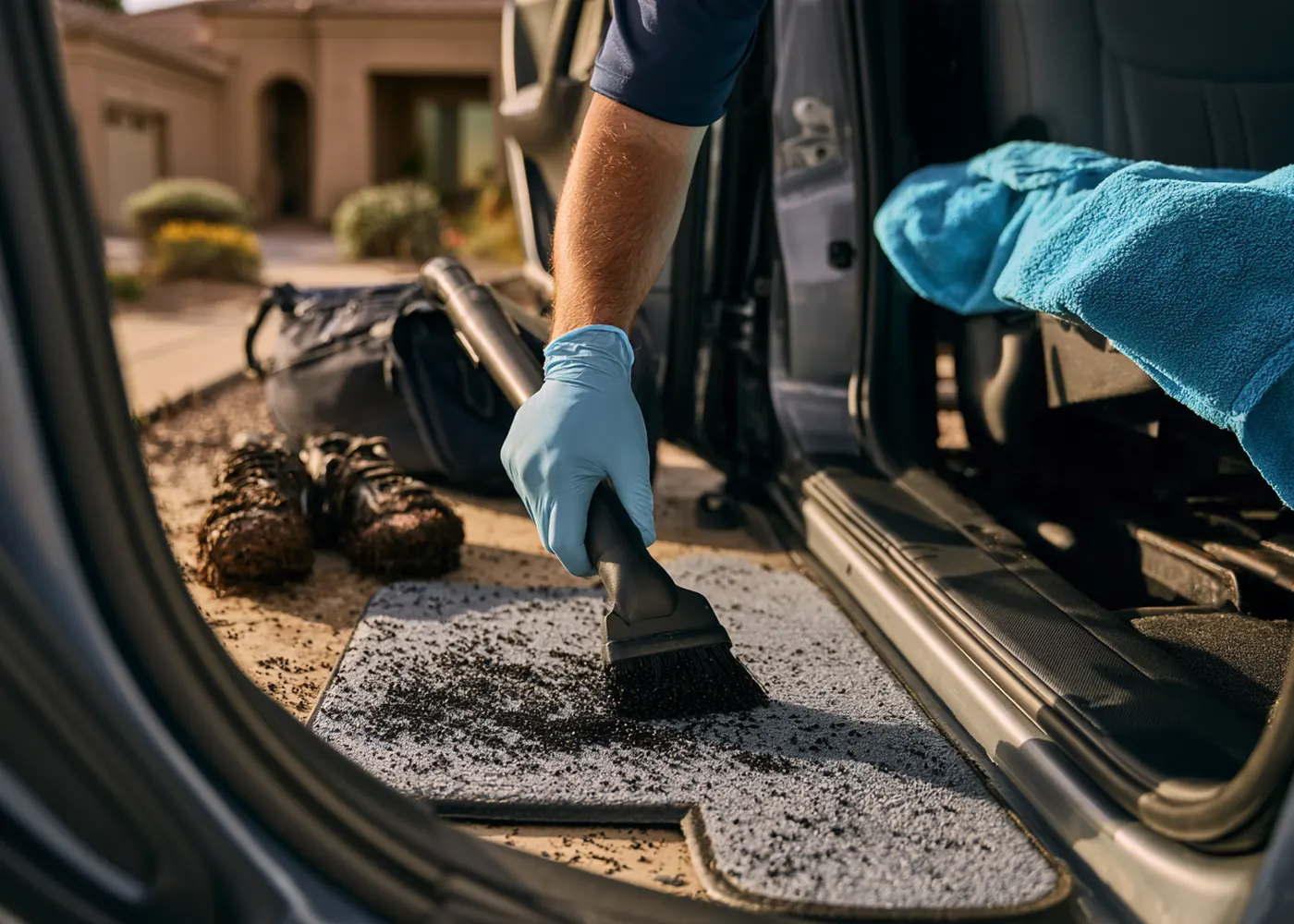
- Vacuum carpets, seats and mats. Dust in the fabric gets pulled back into the air.
- Run the fan on fresh air for a few minutes with the windows down to clear out loose dust.
Avoid spraying cleaners or fragrances directly into vents. Liquid can reach electronics and leave residue that collects more dust.
When Vents Smell Musty or Stale
Dust is not the only problem. A musty or stale smell when the air first turns on can come from moisture and debris in the system, food or drinks spilled near vents, or odors trapped in seats and carpet that the fan spreads around.
Start with a new cabin filter and a thorough interior cleaning. If a smell lingers, our Odor Removal Treatment ($45, about 30 minutes) can help. Persistent smells from inside the climate system itself may need a mechanic to inspect the evaporator and drains.
How an Interior Detail Handles Vents
Vents are one of the most skipped areas in a quick clean, and one of the first things passengers notice. Our Deluxe Shine Detail includes a deep clean of the doors, jambs, dash, cup holders and vents, along with upholstery and floorboard detailing. That removes the dust that has settled into fabric and surfaces so it is not just blown back into the air.
You can read more about what we cover on our interior car detailing page, and compare packages on our pricing page.
Keeping Dust Down Between Details
- Use recirculate on dusty roads and during dust storms, then switch back to fresh air on clean roads.
- Close windows when driving near construction, dirt lots and fields.
- Shake out floor mats every week or two.
- Lift dust from the dash with a soft brush or a clean microfiber towel, using light pressure.
- Replace the cabin filter on the schedule your manual suggests, or sooner in dusty months.
Detailing at Your Home in the East Valley
We are a family-owned mobile detailing company, and we come to you with our own water and power, so there is no need to drive a dusty car across town. We serve Queen Creek, Mesa, Gilbert and the rest of the East Valley.
Frequently asked questions
A wash cleans the outside, but the dust is inside the vents, the dash and the fabric. When the fan turns on, it moves that settled dust. Cleaning the vent slats and interior, plus a fresh cabin filter, solves it.
Follow your owner's manual, and plan on replacing it more often if you drive on dirt roads, near construction or through dust storms. If airflow feels weak or the vents smell stale, check the filter first.
Yes. Dust can carry odors, and debris in the system can hold moisture. A new filter, a clean interior and, if needed, an odor removal treatment usually clear it up.
More From The Blog
Want a price for your vehicle?