How to Remove Tree Sap, Bird Droppings, Tar and Overspray From Your Car
Published · By Andrew
Scheduled for December 14, 2026
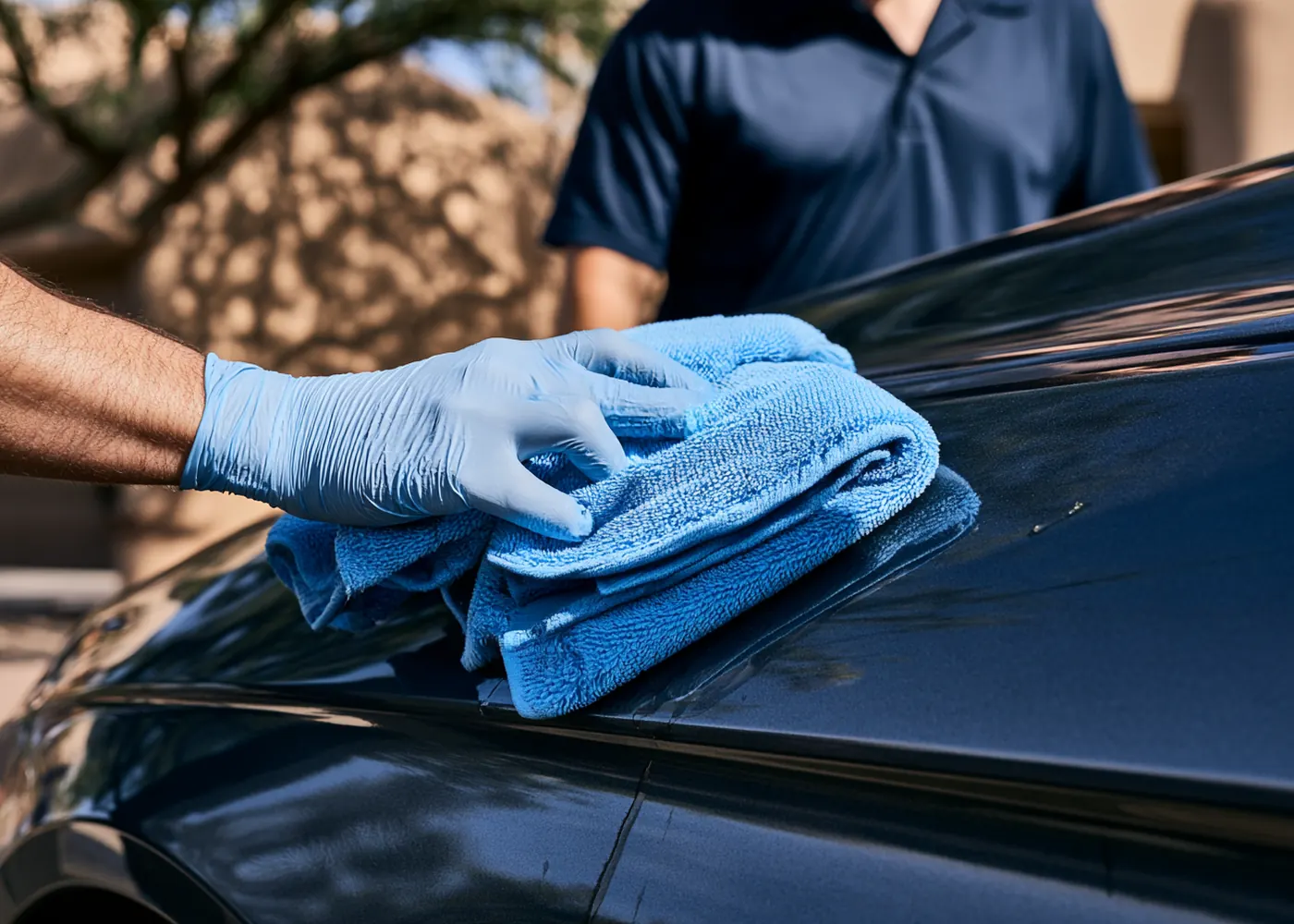
The safest way to remove tree sap from your car is to soften it first, then lift it off. Wash and cool the panel, apply a dedicated sap and tar remover or isopropyl alcohol diluted with water to a soft microfiber towel, let it dwell for 30 to 60 seconds, and wipe gently without scrubbing. Bird droppings, road tar and paint overspray each need their own approach, and in Arizona all of them need attention quickly.
These are called bonded contaminants because they stick to your clear coat instead of rinsing away like dust. A regular wash will not remove them, and the wrong technique can scratch or etch the paint you are trying to protect. Here is how to handle each one.
Why Speed Matters in Arizona Heat
Desert heat changes the clock on paint damage. A dark car parked in the sun in Mesa or Chandler can reach surface temperatures far above the air temperature, even in December. That heat bakes contaminants onto the finish.
- Sap hardens into a glassy bead that grips the clear coat.
- Bird droppings dry fast and are acidic, so they can etch a dull mark into the paint within days.
- Tar softens in heat and spreads when you wipe it the wrong way.
- Overspray cures in place and feels like fine sandpaper.
The rule is simple: the sooner you remove it, the less likely it leaves a permanent mark.
Tree Sap From Mesquite and Pine
Mesquite and pine are the usual culprits around the East Valley, especially if you park under a tree at home, at work or in a shaded lot. Fresh sap is sticky. Old sap is hard and amber colored.
- Wash the area and let the panel cool. Never work on hot paint.
- Apply a sap and tar remover, or isopropyl alcohol mixed roughly half and half with water, to a clean microfiber towel.
- Hold the towel on the sap for 30 to 60 seconds so it softens.
- Wipe gently in one direction. Repeat rather than pressing harder.
- Rinse the area and apply a spray sealant, since alcohol and solvents can strip existing protection.
Never scrape sap with a fingernail, razor or credit card. That is how small spots turn into scratches.
Bird Droppings Baked by the Sun
Bird droppings are the most urgent of the four because of their acidity. Once they dry in direct sun, they can leave an etched outline even after the mess itself is gone.
- Soak a microfiber towel in warm water or quick detailer and lay it over the dropping for a few minutes.
- Lift it off with a gentle pinching motion instead of wiping across the paint.
- Rinse the spot and check it in good light.
If you see a dull or rough outline after cleaning, the clear coat has been etched. Light etching can often be improved with polishing, which is part of our paint correction and polishing services. Deep etching may not come out completely.
Road Tar From Construction Zones
Fresh asphalt from road work around the Valley flicks up behind the front wheels and lands on lower doors, rocker panels and rear bumpers. It shows up as small black or brown dots.
- Use a dedicated tar remover made for automotive paint.
- Spray it on a cool panel and give it time to dissolve the tar. The dots will start to run.
- Wipe gently with a microfiber towel, folding to a clean side often so you do not smear tar around.
- Wash the area afterward and add protection.
Avoid household solvents like gasoline or harsh degreasers. They can damage trim and leave a film.
Paint Overspray
Overspray happens when someone paints a fence, house or nearby car and fine mist drifts onto your vehicle. It is common near apartment repaint projects and HOA stucco work. You will feel it before you see it: run the back of your hand over the paint inside a plastic sandwich bag and it feels gritty.
Overspray does not respond to soap or wiping. It needs mechanical removal with a clay bar or clay towel and lubricant, sometimes followed by polishing. This is one of the jobs where DIY attempts often add scratches, because pressing harder with clay on a dry or dirty panel drags grit across the finish.
How a Clay Bar Fits In
A clay bar is the professional way to remove bonded contaminants that remain after washing. Gliding clay across a well-lubricated panel pulls embedded particles out of the clear coat, leaving the paint smooth to the touch.
Our Premium Shine Detail includes clay bar decontamination of paint and glass, which is a good fit if your car has a general rough feel from months of contaminants. For heavier spots, our Overspray and Tar Removal add-on is $110 for limited areas and takes about an hour. You can see every package side by side on our pricing page.
When to Call a Pro
DIY works well for a few fresh spots. Bring in a professional when:
- Sap or tar covers a large area or the whole lower half of the car.
- Overspray is on multiple panels or the glass.
- You see etching, dull outlines or rough patches after cleaning.
- The paint is soft, dark or recently corrected and you do not want to risk marring it.
We bring our own water and power, so we can handle it in your driveway in Gilbert, at your office, or in a covered garage.
Frequently asked questions
We do not recommend either one. WD-40 leaves an oily film that has to be removed, and acetone in nail polish remover can soften clear coat and damage plastic trim. A dedicated sap and tar remover or diluted isopropyl alcohol is safer.
In Arizona sun, damage can begin within a day or two, and faster on dark paint in summer. Remove droppings as soon as you notice them, even if the rest of the car is not due for a wash.
No. Overspray is bonded to the clear coat, so soap and water slide right over it. It needs clay treatment or careful solvent work to come off without scratching.
More From The Blog
Want a price for your vehicle?