Boat Detailing in Arizona: What to Do When Lake Season Ends
Published · By Andrew
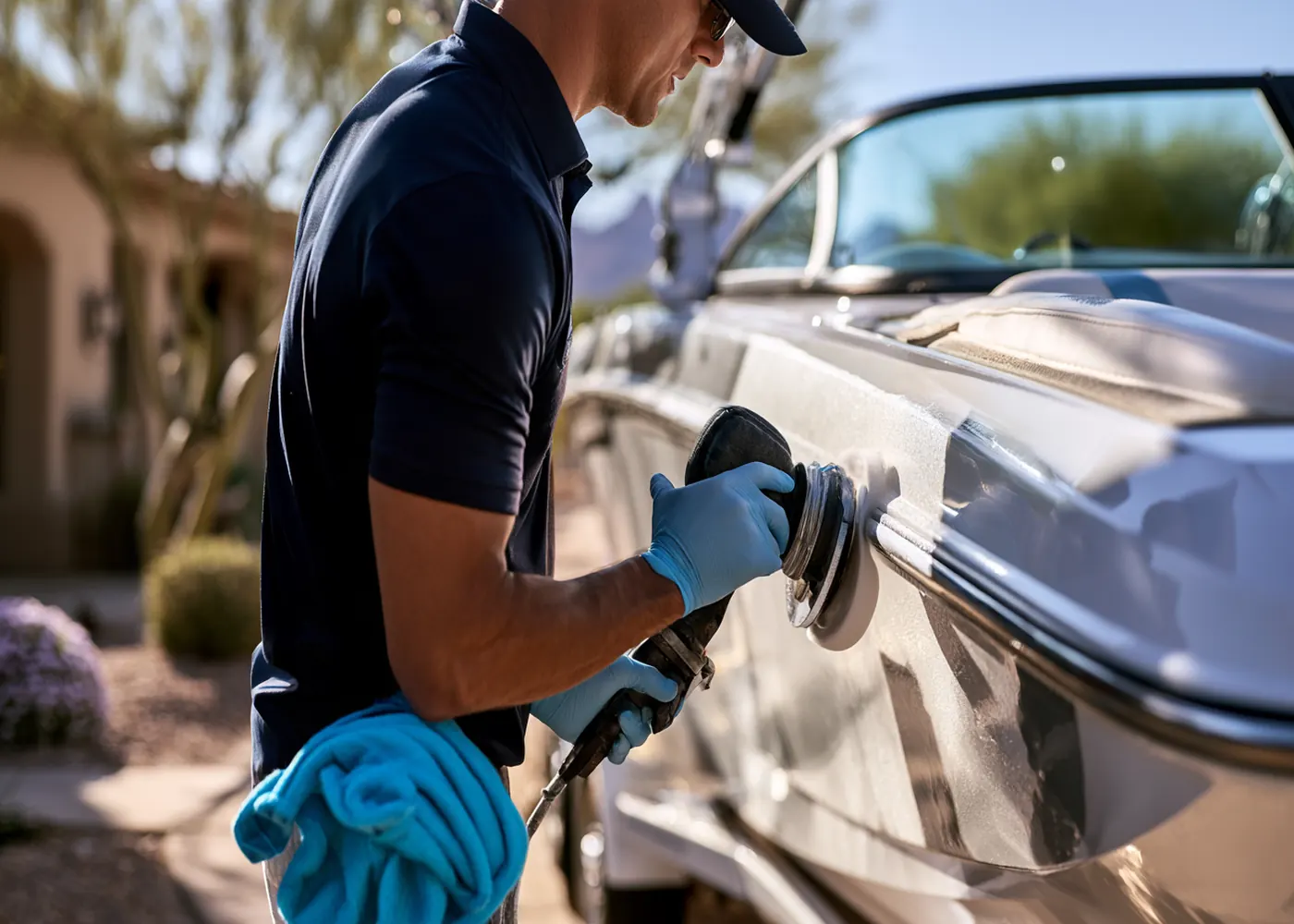
Boat detailing in Arizona is most valuable right after lake season ends, before the boat sits for months on a trailer in full sun. A proper end-of-season detail removes hard water lines, lake scum, mildew and early oxidation so they do not bake into the gelcoat and vinyl over the winter.
If your boat spent the summer on Saguaro, Canyon, Apache, Bartlett or Lake Pleasant, it came home carrying minerals, algae film and sunscreen residue. Here is what that does to a boat in the desert and how to put it away clean.
Why Arizona Is Hard on Boats
Most boating guides are written for places with mild sun and soft water. Arizona has neither. Our boats deal with:
- Intense UV. Gelcoat and fiberglass oxidize faster here, turning chalky and dull. Vinyl seats fade and dry out.
- Hard water. Lake water and the water at home leave mineral deposits that dry into white lines and spots.
- Heat. Surface temperatures on a dark deck or seat can get high enough to bake in grime that would wipe off elsewhere.
- Dust. Monsoon season leaves a fine layer on everything stored outside, and that dust traps moisture in seams and covers.
The good news is that most of this damage starts at the surface. Caught early, it can usually be cleaned and polished out instead of becoming permanent.
The Problems We See After Lake Season
Oxidized Gelcoat
If you run a finger along the hull and it comes away white and chalky, that is oxidation. Light oxidation polishes out well. Heavy oxidation takes more steps, which is why we always look at a boat in person before giving a price. We restore oxidized gelcoat and fiberglass with marine compounds and machine polishing, then seal the surface to slow future UV damage.
Hard Water and Scum Lines
The waterline is where minerals, algae and fuel film collect. Left alone over the winter, those lines harden and stain. They are much easier to remove right after the season than next spring.
Vinyl Seats and Mildew
Wet towels, life jackets and damp cushions trapped under a cover create the perfect spot for mildew, even in a dry climate. Sunscreen and body oils also build up on vinyl, which makes it feel sticky and speeds up cracking in the heat.
Carpet, Storage Compartments and Hardware
Sand, snack crumbs and lake water collect in the floor carpet and storage lockers. Stainless and chrome hardware picks up water spots that look like rust if they sit long enough.
An End-of-Season Boat Cleaning Checklist
Whether you do it yourself or have it done, here is the order that works best:
- Empty everything. Pull life jackets, towels, ropes, coolers and gear out of every compartment. Let them dry fully before they go back in.
- Wash the hull and deck with a marine-safe soap, working from top to bottom. Rinse well and dry with clean microfiber to prevent new spots.
- Treat the waterline with a product made for scum and mineral lines. Test it in a small area first.
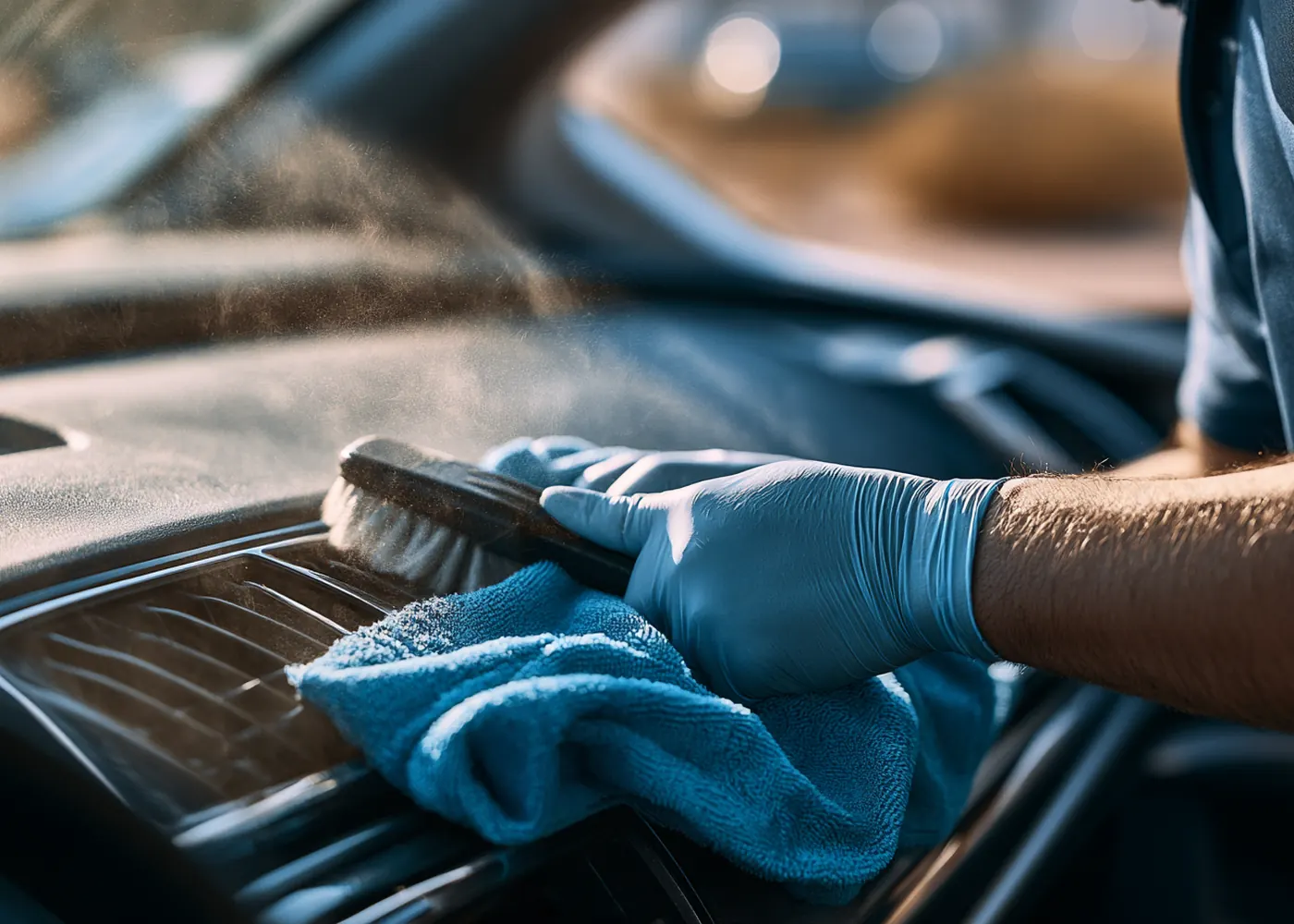
- Clean the vinyl with a vinyl-safe cleaner and a soft brush, then dry it. Avoid household cleaners and anything with bleach, which dries vinyl out.
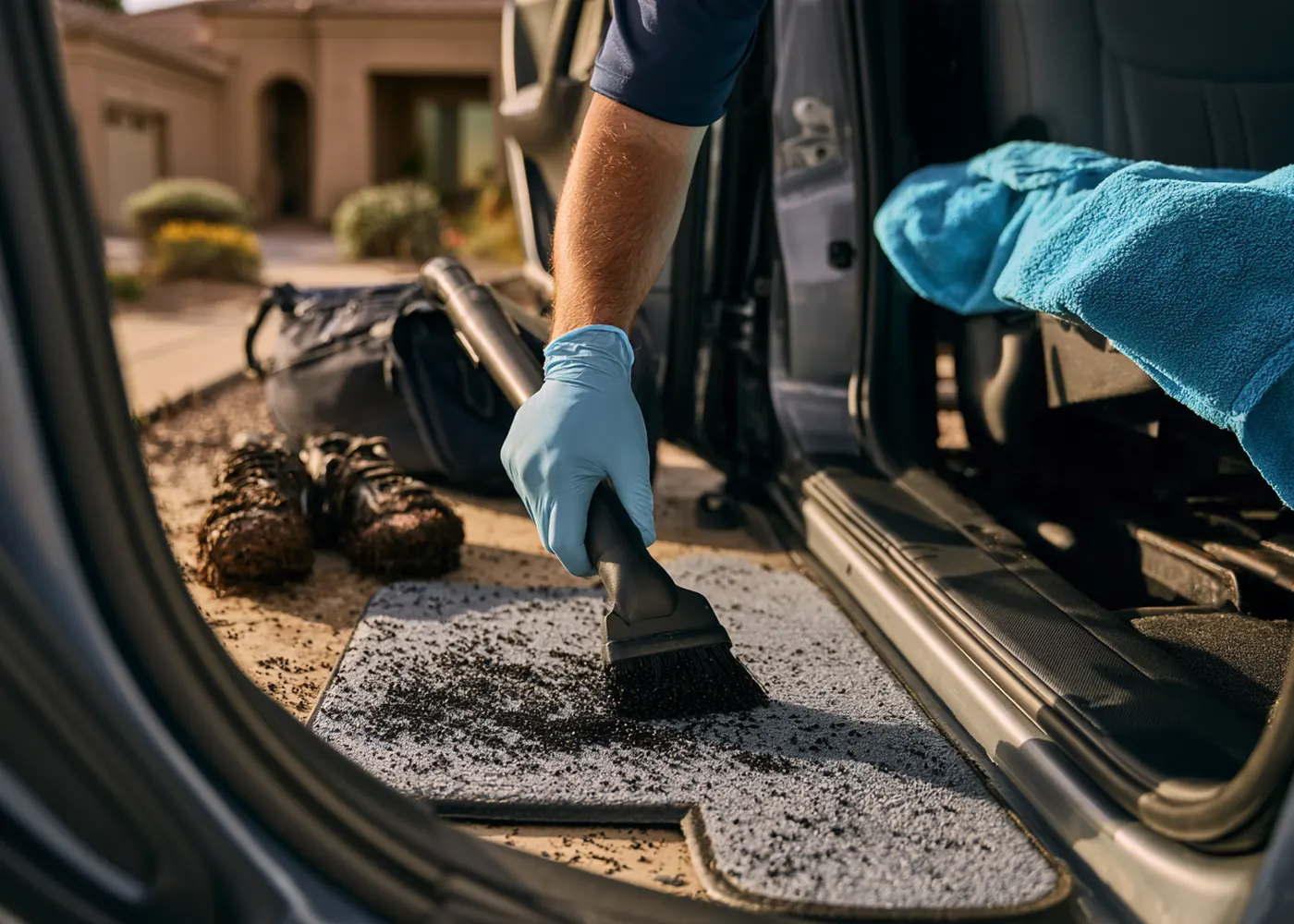
- Vacuum and clean the carpet and storage areas, and leave hatches cracked to air out if the boat is stored in a secure spot.
- Polish and protect the gelcoat. This is the step that keeps winter sun from finishing what summer started.
- Cover it right. Use a breathable cover that fits snugly, so wind does not whip it against the finish and moisture can escape.
Storing a Boat in the Desert Sun
Many East Valley boat owners do not have a garage that fits the boat, so it sits in a side yard or storage lot. A few habits make a big difference:
- Park it with the most expensive surfaces (console, seats, upholstery) facing away from afternoon sun when you can.
- Keep the cover clean. A dusty cover rubbed by wind acts like fine sandpaper on the gelcoat.
- Check under the cover after a storm. Monsoon season may be over, but winter rain can still pool.
- Plan a wash every month or two during storage if it sits outdoors.
What a Professional Boat Detail Looks Like
Because boats vary so much in size, condition and layout, we do not quote boats off a chart. We set up an in-person inspection, look at the gelcoat, vinyl and interior, and give you a clear estimate. A full interior and exterior boat detail typically takes 3 to 8 hours, and heavy oxidation removal adds time.
Our units are self-contained with their own water and power, so we can work on your boat in your driveway or wherever it is stored, as long as there is room to work and permission from the property. You can learn more on our RV and boat detailing page, and if you also own a motorhome or trailer, our guide to RV detailing in Phoenix covers that side.
Boat owners in Mesa, Apache Junction and Gold Canyon are close to the Salt River lakes, so many of them schedule this detail the week the boat comes off the water for the year. That timing makes the next season's prep far easier.
Frequently asked questions
At least every 6 to 12 months for most boats. Boats stored outdoors in direct sun or used often on mineral-heavy lake water benefit from more frequent service, because oxidation and staining set in faster here.
Often, yes. Many storage facilities allow vendors if there is room to work and the property approves. Check with your facility first, then let us know the location and any rules when you request an estimate.
Before. Cleaning and sealing the boat at the end of the season stops minerals, scum and mildew from hardening in place for months. A lighter wash and touch-up in spring is then usually all it takes to get back on the water.
More From The Blog
Want a price for your vehicle?