Best Car Coating for Desert Heat: Top Options Compared
Published
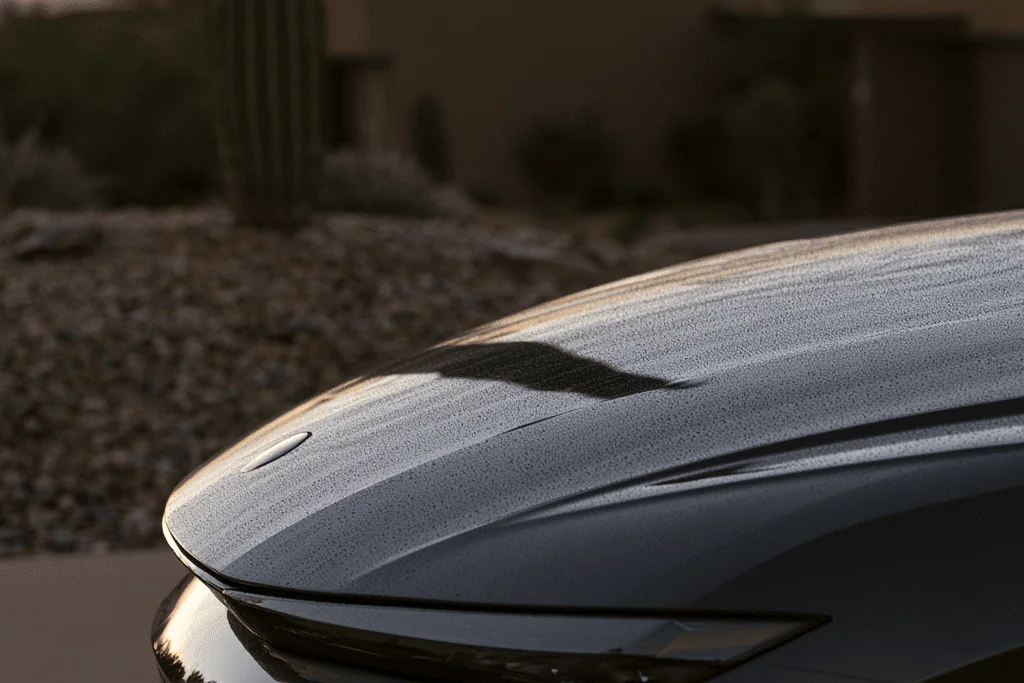
Arizona sun, heat, dust and hard water can affect vehicle surfaces. ShineCo is based in Mesa and serves the East Valley and Greater Phoenix.
The right coating buys your paint years. The wrong one melts, hazes, or washes off by August. Here is how the four main options actually perform in desert heat, what each one costs, and which combination makes sense for a daily driver in Mesa, Gilbert, Chandler, or anywhere else in the East Valley.
Why Desert Heat Destroys Paint Differently
Before comparing products, it helps to understand what you are protecting against. Arizona paint damage comes from four sources working at the same time.
- Arizona sun, heat, dust and hard water can affect vehicle surfaces. ShineCo is based in Mesa and serves the East Valley and Greater Phoenix.
- Arizona sun, heat, dust and hard water can affect vehicle surfaces. ShineCo is based in Mesa and serves the East Valley and Greater Phoenix.
- Abrasive dust: Desert dust is fine, dry, and sharp. It embeds in soft, hot paint and grinds in during improper washing, which is where most swirl marks come from.
- Monsoon water spotting: Valley water is hard. Rain that picks up dust and dries on a 160 degree panel leaves mineral deposits that etch into the clear coat within hours.
Any coating you choose has to survive all four. That narrows the field quickly.
Option 1: Ceramic Coating
Ceramic coatings are liquid polymers, usually silicon dioxide based, that chemically bond to your clear coat and cure into a hard, semi-permanent layer.
- How it handles heat. This is where ceramic separates itself. A properly cured ceramic coating tolerates temperatures far beyond anything a parked car will see in Arizona, and it does not soften or migrate the way wax does. The coating also blocks a meaningful portion of UV before it reaches your clear coat.
- ShineCo offers 1, 2, 3 and 4 year ceramic coatings. The 3 and 4 year coatings require a booster every 6 months.
- Real-world benefits. Strong hydrophobic behavior means monsoon water beads and rolls off instead of sitting and etching. Dust releases more easily, so washes take less time and cause less abrasion. Bug guts and bird droppings sit on top of the coating instead of eating into clear coat.
- Limitations. Ceramic is chemical protection, not physical armor. It will not stop a rock chip on the 101 and it will not stop a shopping cart. It also requires real surface prep to bond properly, which is why application matters as much as the product.
- ShineCo ceramic coatings start at $215 for 1-Year Ceramic, $285 for 2-Year Ceramic, $355 for 3-Year Ceramic, $465 for 4-Year Ceramic. Trucks and SUVs add $80. Application takes a full day. The 3 and 4 year coatings require a booster every 6 months. We highly suggest pairing a ceramic coating with one of our Paint Correction packages. Paint correction is priced separately. Paint Enhancement starts at $400 for cars, with a $130 truck/SUV surcharge, and takes 4 to 6 hrs. Paint Correction starts at $715 for cars, with a $170 truck/SUV surcharge, and takes 8 to 12 hrs. Both packages include an exterior hand wash and clay bar decontamination. Scottsdale ceramic coating.
Option 2: Paint Protection Film (PPF)
PPF is a thermoplastic urethane film applied over painted panels. Think of it as a clear, self-healing skin.
- How it handles heat. Quality PPF is UV stable and holds up well to Arizona sun. Cheap film is the problem. Low-grade PPF yellows, bubbles, and lifts at the edges in extreme heat, and removing failed film can pull clear coat with it. If you go this route, the brand and the installer matter enormously.
- Durability. Five to ten years for premium film, often with a manufacturer warranty against yellowing and cracking.
- Real-world benefits. PPF is the only option on this list that stops physical damage. Rock chips, road debris, light scratches, and door dings on covered panels all get absorbed by the film. Most modern films are self-healing, meaning light scratches disappear with heat exposure, which Arizona provides for free.
- Limitations. Cost. Full-front coverage typically runs well into four figures and a full-vehicle wrap runs several times that. PPF also does not deliver the same slick, hydrophobic surface that ceramic does unless you coat it afterward.
Option 3: Paint Sealant
Sealants are synthetic polymer products, essentially the middle ground between wax and ceramic.
- How it handles heat. Better than wax, worse than ceramic. Modern polymer sealants do not melt off in summer the way carnauba does, but the bond is not as durable and UV degrades it steadily.
- Durability. Four to six months in mild climates. In Phoenix summer, plan on three to four months before performance drops noticeably.
- Real-world benefits. Inexpensive, easy to apply, meaningfully better than nothing. A sealant is a reasonable choice if you lease, if you garage the car, or if you simply are not ready to invest in a coating.
- Limitations. You are re-applying two to four times a year. Over a three-year ownership window, the cumulative cost and labor often exceed a single ceramic application.
Option 4: Carnauba Wax
Traditional wax is a natural product that sits on top of your paint rather than bonding to it.
- Arizona sun, heat, dust and hard water can affect vehicle surfaces. ShineCo is based in Mesa and serves the East Valley and Greater Phoenix.
- Durability. Six to eight weeks in a temperate climate. Realistically three to six weeks through an Arizona summer, and less if the car lives outside.
- Real-world benefits. Wax produces a warm, deep gloss that enthusiasts genuinely prefer on dark paint. For a garaged show car, it still has a place.
- Limitations. As functional desert protection, wax is not competitive. Treat it as a cosmetic layer, not a defense.
So What Is the Best Car Coating for Desert Heat?
For most Valley drivers, ceramic coating is the answer. It directly counters the three things that actually kill paint here: UV degradation, thermal stress, and mineral etching from dust and monsoon rain. It lasts through multiple summers instead of multiple weeks, and it makes ongoing maintenance easier, which matters more than people expect. Most desert paint damage is not caused by the sun alone. It is caused by the sun plus years of dragging a dirty mitt across dusty paint.
Two situations change the recommendation:
- You drive highway miles daily. If you are on the 60, the 101, or the I-10 every day, rock chips are your primary threat, not fading. Put PPF on the front bumper, hood, mirrors, and A-pillars, then ceramic coat the entire vehicle including the film. This is the strongest setup available and the reason most serious owners combine the two rather than choosing between them.
- You are in a short-term lease and the car is garaged. A quality sealant refreshed a few times a year is adequate and cost-effective.
Making a Ceramic Coating Last in Arizona
The coating is only half of the outcome. Preparation and maintenance decide the rest.
- Correct the paint first. A coating locks in whatever is underneath it. Applying ceramic over swirl marks and oxidation preserves those defects under a glossy layer for years. Any reputable installer will decontaminate and polish before coating.
- Do not let it cure in direct sun. Coatings need controlled application and cure time. This is one advantage of mobile service that comes to your driveway or covered parking rather than a car sitting on an open lot.
- Wash with the two bucket method or touchless. Automatic brush washes undo coating performance quickly. Wash every two weeks in dust season and always in the shade or after sundown so water does not flash-dry into spots.
- Do not park under a mesquite or palo verde if you can avoid it. Sap and pollen are relentless in spring, and while a coating makes cleanup far easier, prevention is still cheaper.
- Rinse after monsoon storms. Dust-laden rain that dries on hot panels is the single most common source of water spotting in the Valley. A quick rinse the next morning prevents most of it.
Frequently asked questions
ShineCo offers 1, 2, 3 and 4 year ceramic coatings. The 3 and 4 year coatings require a booster every 6 months.
For a vehicle that parks outside, yes. Over a three-year period a coating usually costs less than repeated sealant applications, and it substantially slows the clear coat oxidation that leads to fading and eventual repaint.
It slows fading significantly by blocking a meaningful portion of UV and preventing the clear coat oxidation that causes it. It cannot reverse fading that has already happened. That takes paint correction before the coating goes on.
No. Ceramic is a chemical barrier measured in microns. For impact protection you need paint protection film.
Yes. Mobile application works well as long as the vehicle is in shade or covered parking and the surface is properly prepped. ShineCo applies coatings on site throughout Mesa, Gilbert, Chandler, Tempe, Queen Creek, and the rest of the East Valley.
More From The Blog
Want a price for your vehicle?